 FR
FR 
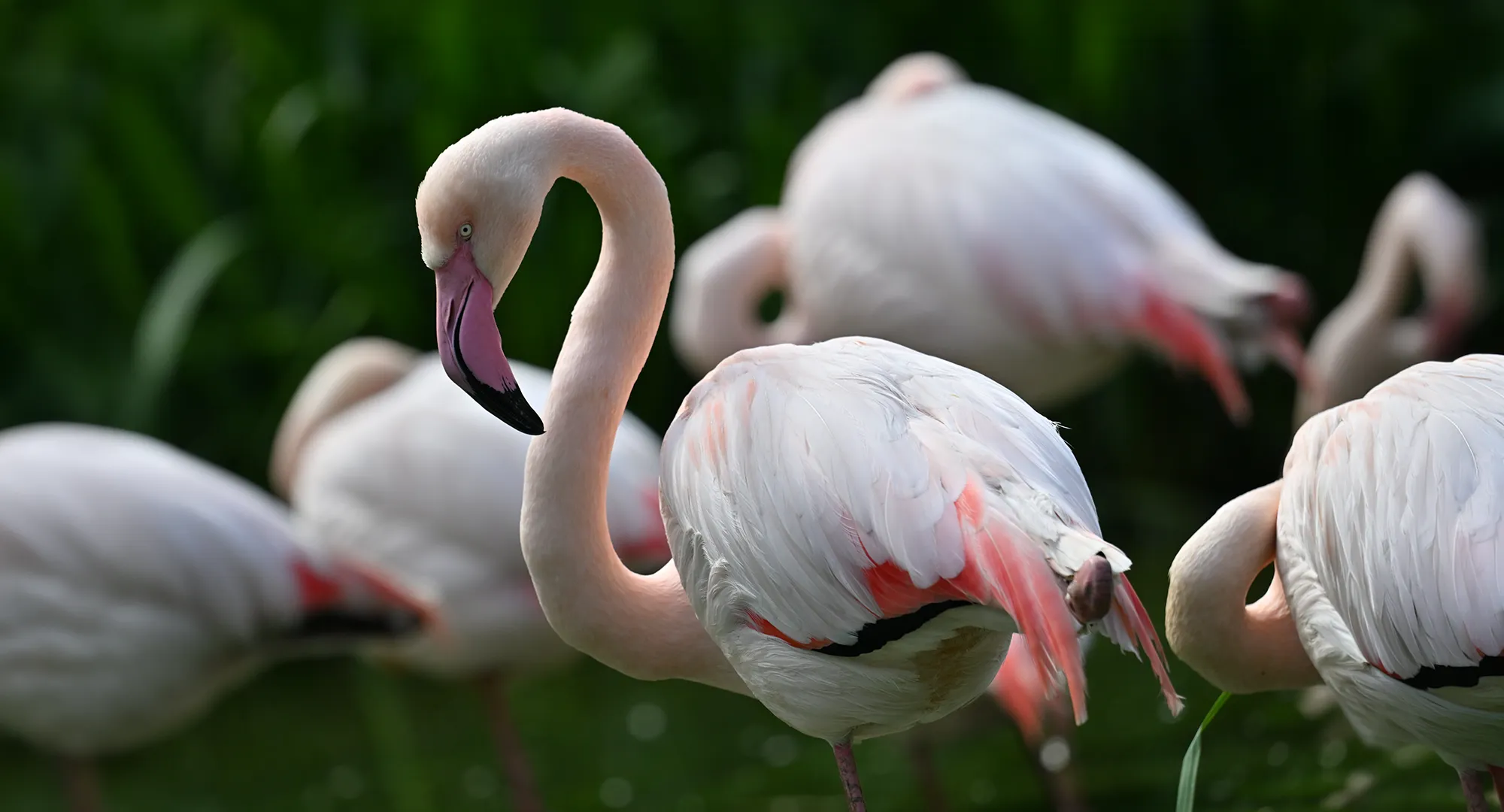
Greater Flamingo
I.U.C.N status
International Union for Conservation of Nature
LC
Least concern
NT
Near threatened
VU
Vulnerable
EN
Endangered
CR
Critically endangered
EW
Extinct in the wild
EX
Extinct

Identity card
Class :
Birds
Order :
Phoenicopteriformes
Family :
Phoenicopteridae
Genus :
Phoenicopterus
Species :
roseus
Average size
127 cm / 145 to 165 cm (wingspan)
Weight
2 to 4 kg
Longevity
33 years
Sexual maturity
3 to 4 years
Gestation
27 to 31 days
Litter
1 egg
Diet
Piscivore
Protozoa, algae, crustaceans, molluscs, insects.
Did you know?
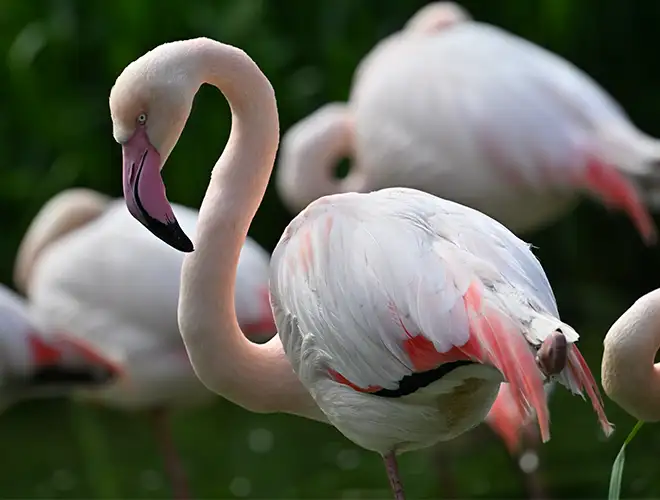
Flamingos are characterized by their unique beak, designed to feed in a different way from other birds. Thanks to a filtering and pumping system, they can extract their food from the water by filtering out food particles. In fact, the pink color of their feathers comes from the carotenoid pigments found in their food.
Threats and conservation
Flamingos are particularly vulnerable to human disturbance, as well as to the destruction and drying out of wetlands, which represent their main threats. The Camargue is the main permanent breeding ground for flamingos in France. This species is protected throughout the national territory.